

Neurophysiology Study Published in Journal of Neuroscience
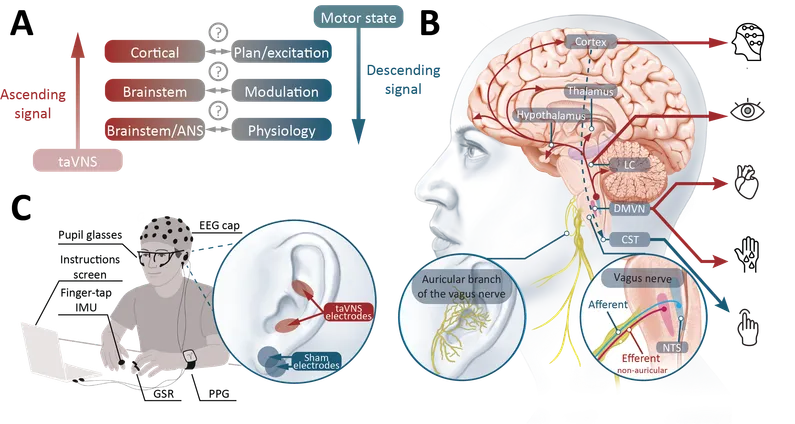
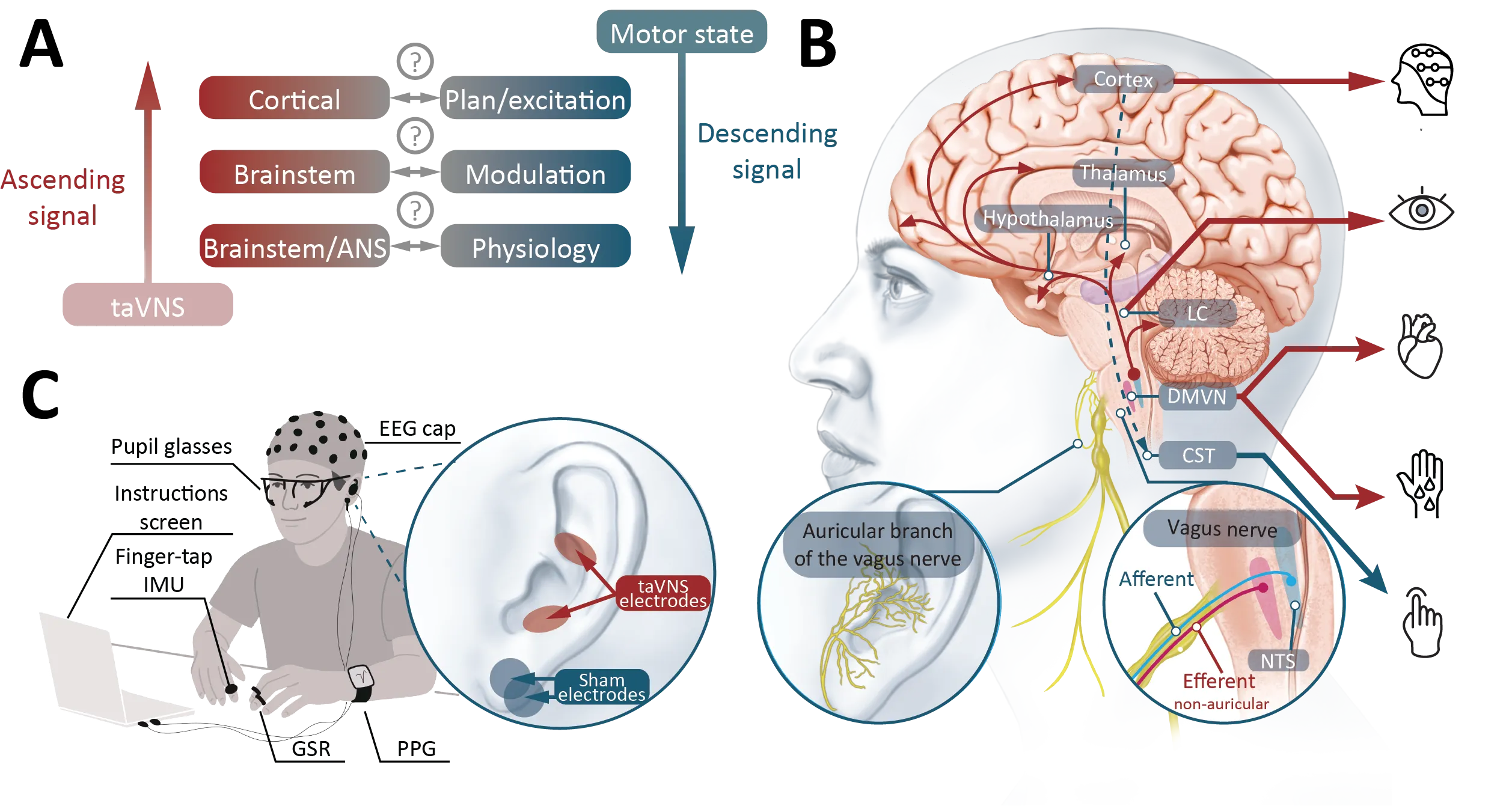
We are delighted to share that our neurophysiology study has been peer-reviewed and officially published in The Journal of Neuroscience. The paper uncovers the mechanism behind pairing transcutaneous auricular vagus nerve stimulation (taVNS) with movement, the principle at the heart of SmartVNS, and shows that brief taVNS bursts open a precise, state-dependent window in which task-engaged motor circuitry is selectively boosted.
Citation: Perrin C, Pallotti F, Weilenmann T, Lhoste C, Potok-Szybinska W, Zhang X, Wenderoth N, Lambercy O, Donegan D, Viskaitis P. Transcutaneous Auricular Vagus Nerve Stimulation during Movement Selectively Activates Motor Circuitry without Additional Cortical or Autonomic Effects. The Journal of Neuroscience, 24 June 2026, 46(25):e2251252026. doi: 10.1523/JNEUROSCI.2251-25.2026
This study was first shared last year as a bioRxiv preprint; we are thrilled to see it now through peer review and in print.
Why this matters
taVNS is increasingly paired with physical therapy in neurorehabilitation, yet almost all prior mechanistic work tested stimulation at rest, overlooking the dynamic neural activity that is engaged during actual movement. The question we set out to answer was simple but fundamental: when you stimulate the vagus nerve while someone is moving, what actually happens in the brain, and is it any different from stimulating at rest?
What we found
Thirty-six healthy adults completed two experiments in which 2-second taVNS bursts were delivered during a finger-tapping (go/no-go) task, while we recorded brain and body responses. The results point to a clear, selective mechanism:
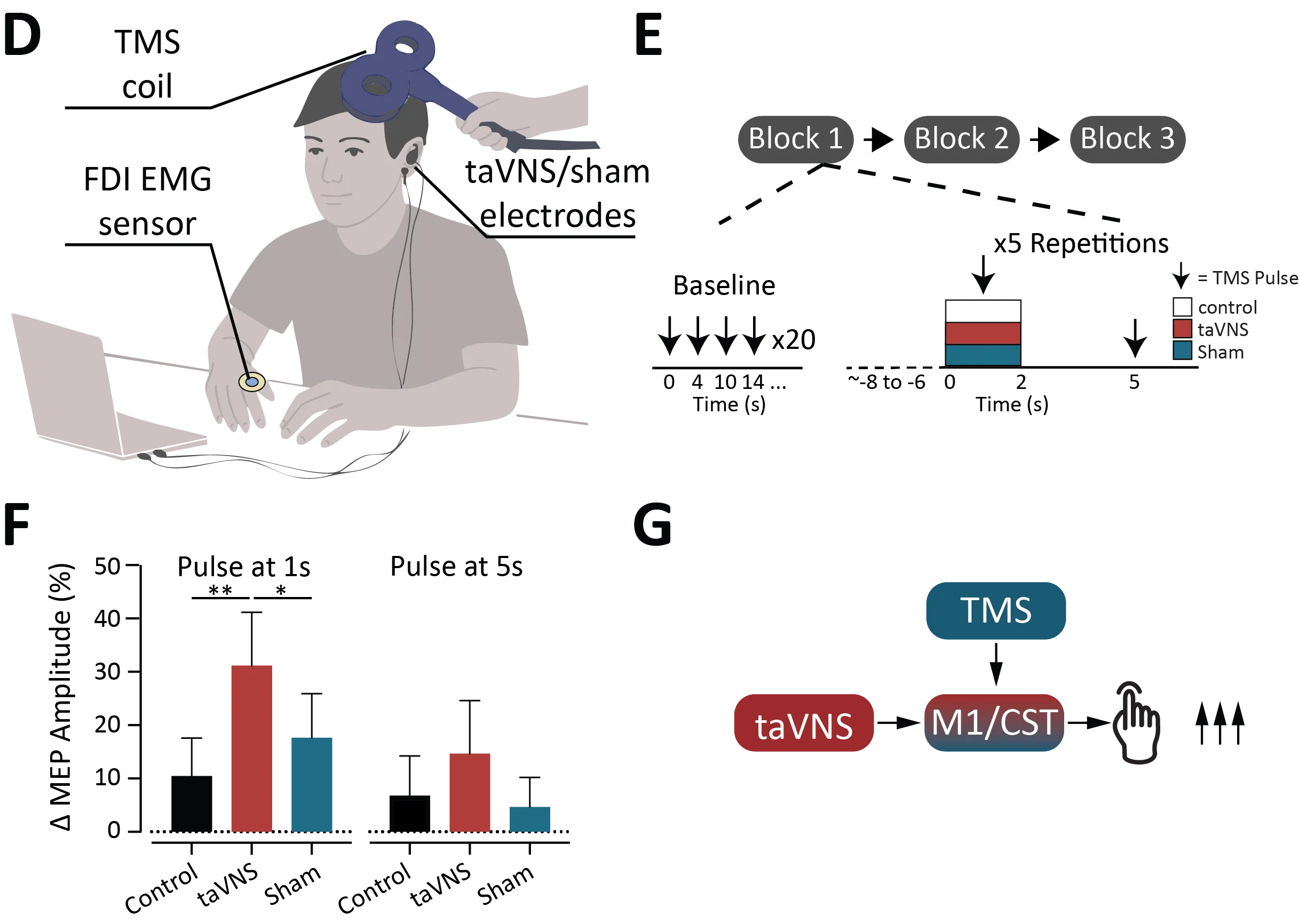
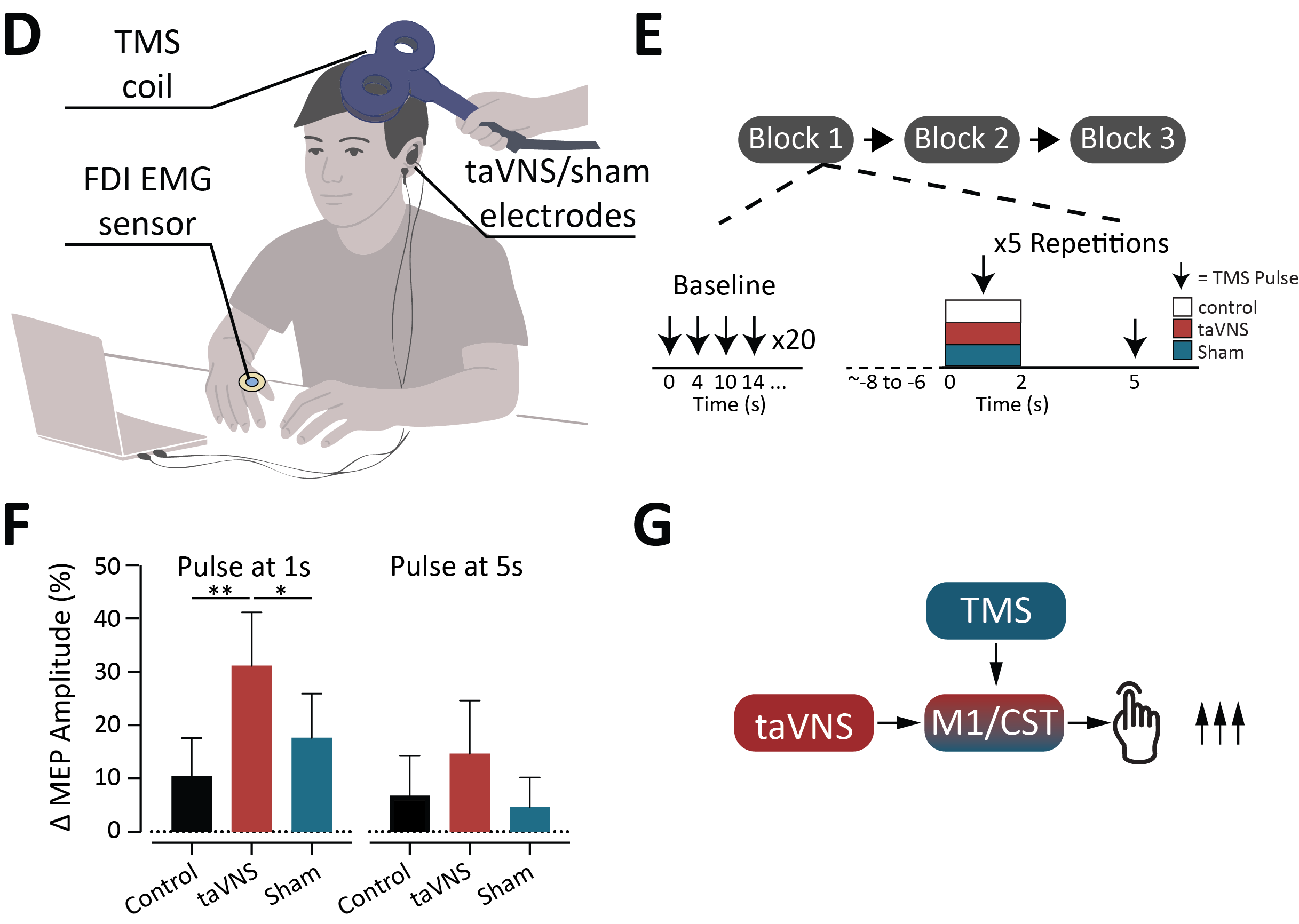
- Corticospinal output is transiently boosted, but only when the motor system is engaged. Using TMS to probe the motor pathway directly, taVNS increased motor evoked potential (MEP) amplitudes by roughly 31% when the pulse coincided with stimulation, returning to baseline shortly after.
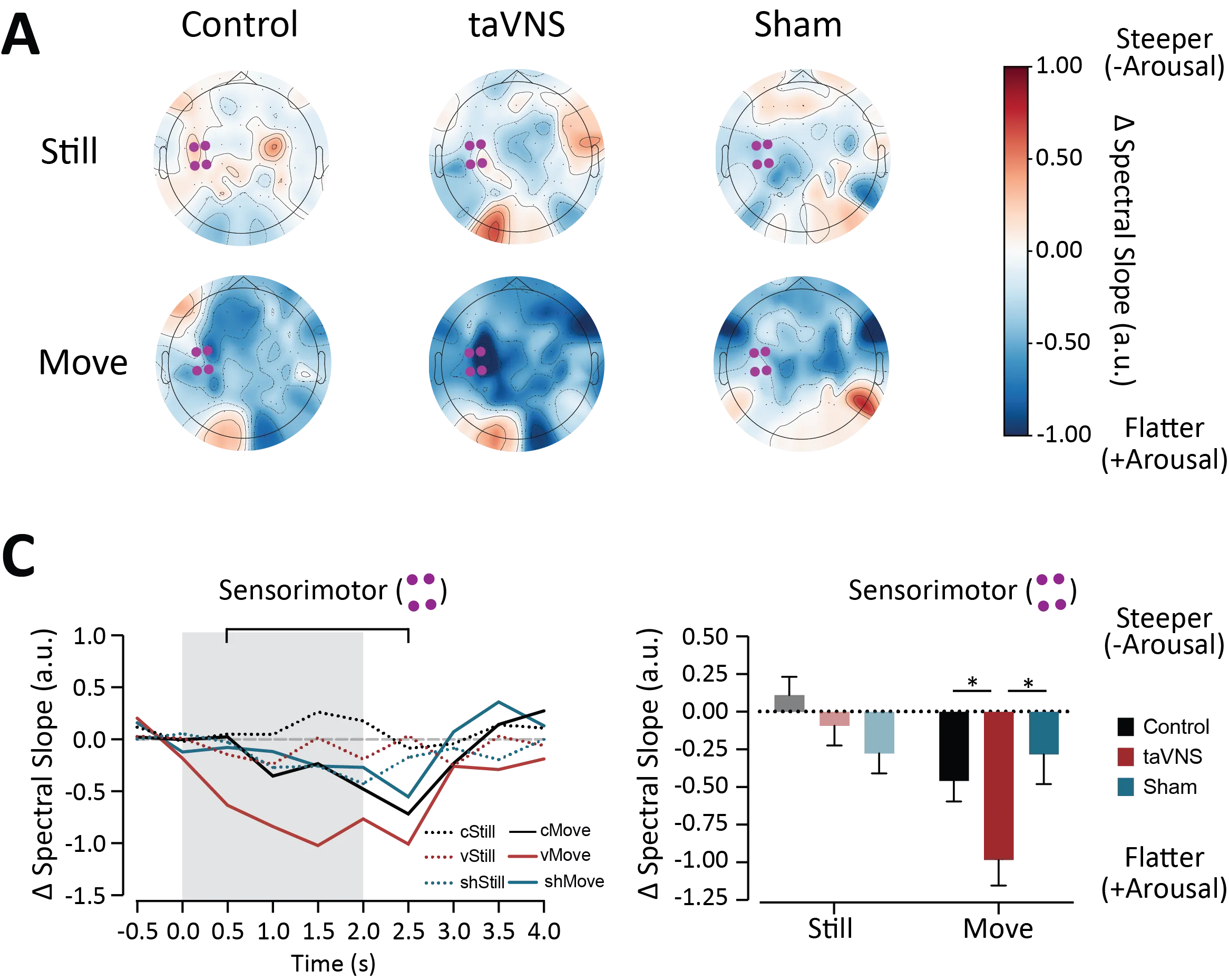
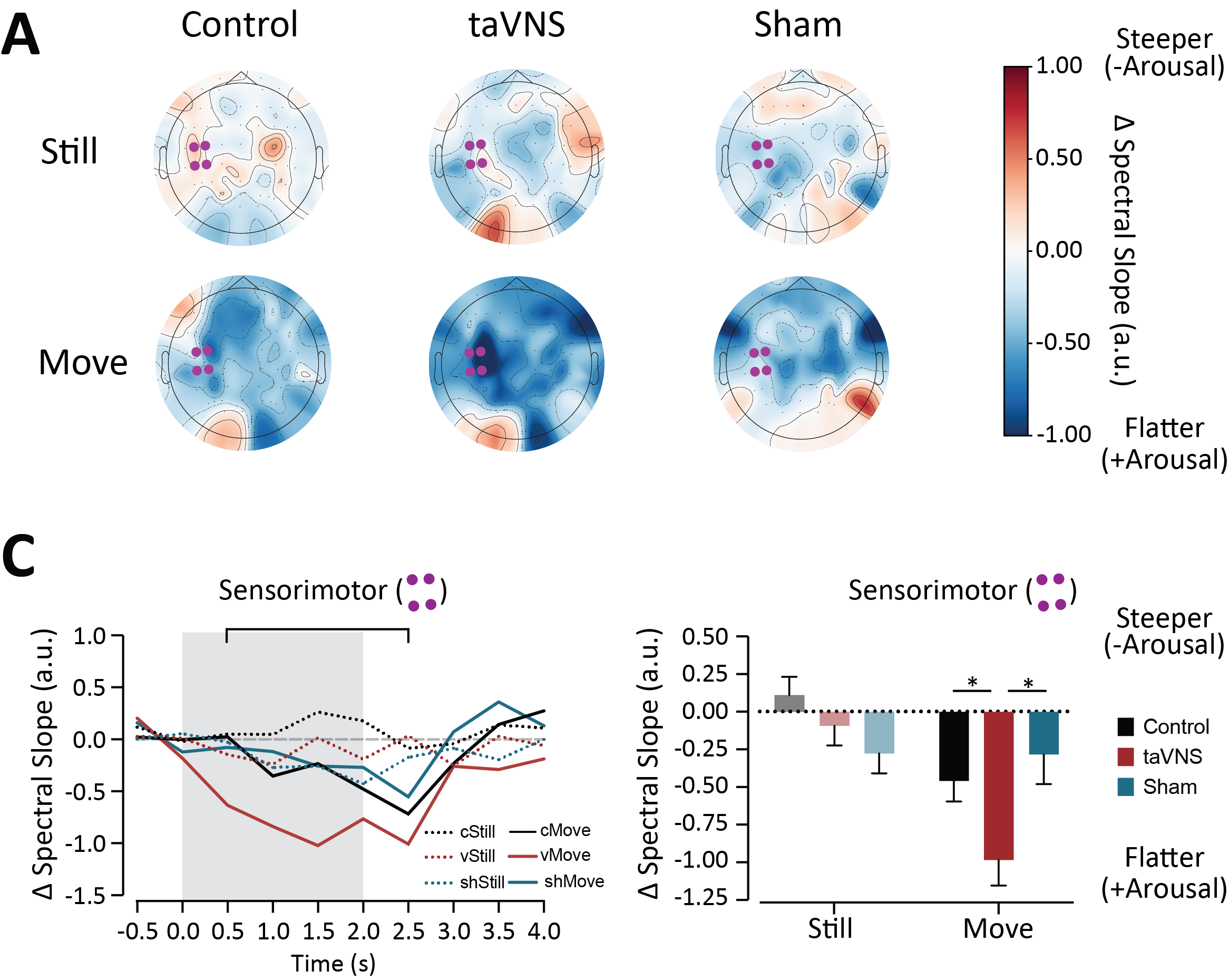
- Cortical effects were state-dependent and regionally specific. EEG markers of sensorimotor activity were enhanced by taVNS during movement, but not during stillness, with no broad, global change in cortical arousal.
- Neuromodulatory engagement was movement-independent. taVNS produced robust pupil dilation in both still and moving conditions, consistent with recruitment of central neuromodulatory systems regardless of behavioral state.
- No extra autonomic load. Heart rate and galvanic skin response were not additionally modulated by taVNS beyond the changes movement itself produced, arguing against broad, nonspecific systemic activation.
Together, these findings identify a state- and time-specific window in which taVNS preferentially amplifies task-engaged motor pathways rather than producing diffuse, whole-body effects. They provide direct mechanistic support for movement-paired stimulation protocols, and highlight pupil, EEG, and MEPs as sensitive biomarkers of taVNS effects, a foundation for timing stimulation to therapeutic movements in neurorehabilitation.
Acknowledgements
This work was led by Cléo Perrin and Flaminia Pallotti, under the guidance of Dr. Dane Donegan and Dr. Paulius Viskaitis, and carried out at the Rehabilitation Engineering Laboratory at ETH Zürich together with our collaborators.
A heartfelt thank you to the full author team: Cléo Perrin, Flaminia Pallotti, Tiziano Weilenmann, Clément Lhoste, Weronika Potok-Szybinska, Xue Zhang, Nicole Wenderoth, Olivier Lambercy, Dane Donegan, and Paulius Viskaitis, and to every participant who gave their time to make this study possible.
We look forward to continued discussion and collaboration with others working on state-dependent neuromodulation, VNS, and motor system recovery. Get in touch if you would like to learn more or collaborate.